
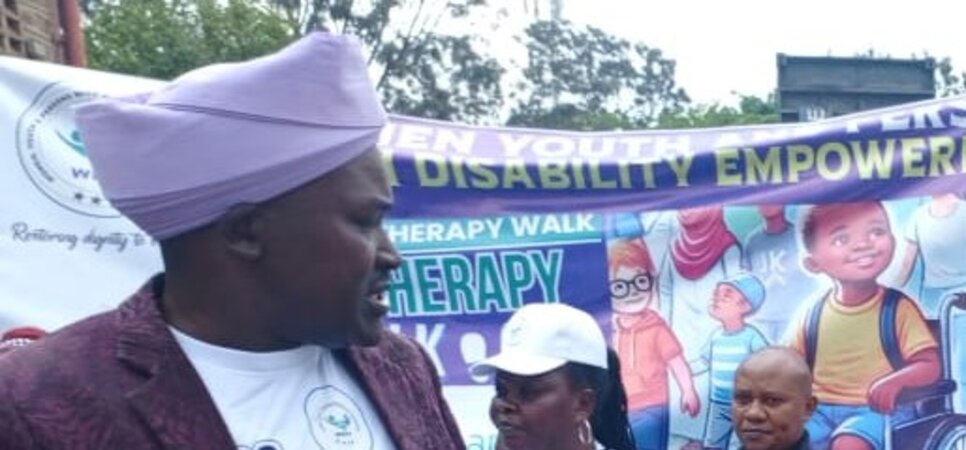
The most common accessibility problem in Kenya is not an illegal building. It is the same legal footpath, blocked, with the same drainage culvert, with nobody held to account and nothing in the way of a person who cannot get past it.
WECY's Disability Rights and Advocacy Programme follows these problems to the body that can fix them. A resident reports a blocked route. We document it with photographs and measurements. We identify the responsible county or national office. We follow up, repeatedly, with the paperwork already prepared, until somebody answers.
What makes the programme work is that the people affected do the advocating. Persons with disabilities are trained and supported to make the case themselves, in the room, with us in the background. That is a deliberate choice. A case presented by an organisation is a request. The same case presented by the person who will be measured against it is a matter of record.
The visible outcomes are small and satisfying: a route reopened, a meeting attended, a line item moved in a budget, a policy document redrafted to mention accessibility instead of ignoring it. The larger shift is procedural. Local officials begin to expect the question, and begin to answer it before it is asked.
Advocacy is slow in a way that programmes are not. There is no graduation photograph. The measure is whether the next disabled person to report a blocked footpath is believed sooner than the last one was.